Introduction
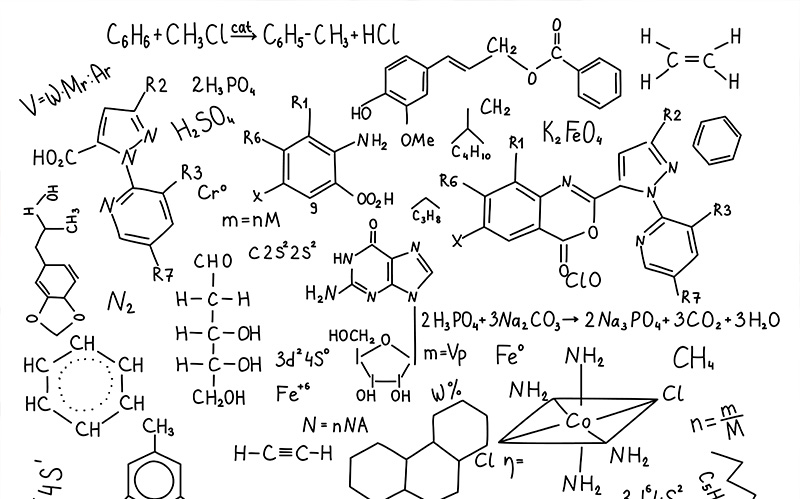
Chemistry is often labelled one of the toughest subjects because so much of it deals with abstract ideas that cannot be seen directly. Many students turn to memorisation, but this approach quickly unravels when faced with challenging problem-solving or unfamiliar exam questions. Visual learning offers a powerful alternative by turning invisible processes into clear, memorable images that students can understand and apply. From atomic structures to reaction mechanisms, the right visuals can bridge the gap between theory and comprehension.
At The Chemistry Practice, our team of tutors apply proven visual learning techniques in chemistry to make abstract concepts tangible and accessible, helping students at every level. In the next section, we explore what visual learning means in chemistry and why it is such a powerful tool for students.
Key Takeaways:
It involves abstract ideas such as atoms, ions, and molecular interactions that cannot be directly observed, making it hard to learn through memorisation alone.
It is the use of diagrams, models, and representations to make invisible concepts clearer, helping students process, connect, and recall information more effectively.
Through models and diagrams, analogies and storytelling, digital simulations, and practical lab demonstrations that bridge theory with real-world understanding.
They achieve stronger exam performance, deeper conceptual mastery, greater confidence, and long-term skills that support advanced studies in science-related fields.
Learners taking chemistry or pure chemistry in secondary, or those with H2 Chemistry, struggle with abstract thinking or rely heavily on memorisation. |
What is Visual Learning in Chemistry?

Definition & Importance
Visual learning in chemistry is about using images, models, and representations to translate theory into something students can actively process. Instead of memorising dense blocks of text, learners work with flow diagrams, molecular structures, and reaction maps that show relationships clearly. These visuals act as anchors, helping students connect new knowledge to what they already understand.
This approach is especially important for exam preparation. In Chemistry, students often need to recall entire reaction pathways or structural features under time pressure. Visual cues, such as energy diagrams or molecular geometry sketches, make recalling faster and more accurate.
Science Behind Visual Learning

The human brain is naturally wired to process images more quickly than text. Studies show that we interpret visual information in milliseconds, while written words take longer to decode and store in memory. For students studying chemistry, this means that diagrams, models, and animations can reduce the mental effort needed to understand new material. Instead of struggling with dense equations or symbolic notations, learners can focus on recognising patterns and linking concepts.
Visuals serve as mental anchors, helping students recall information more easily under exam pressure. For instance, remembering the tetrahedral geometry of methane or the steps of an esterification reaction is far easier when attached to a clear sketch or flow diagram. This makes problem-solving less about rote memorisation and more about applying understanding flexibly to new questions.
What Visual Learning Techniques Do Tutors Use to Simplify Chemistry?
Models and Diagrams
One of the most effective ways to simplify complex chemistry topics is through the use of models and diagrams. Ball-and-stick and space-filling models, for instance, give students a concrete way to picture molecular shapes, bond angles, and atomic arrangements. Instead of memorising spatial descriptions, learners can see the 3D structures in front of them, which makes abstract geometry more intuitive.
Energy-level diagrams and orbital illustrations are another valuable tool. These show how electrons occupy shells and subshells, or how orbitals combine to form bonds. Tutors guide students through these visuals step by step, breaking down advanced theories such as hybridisation or molecular orbital theory into manageable stages.
For secondary students taking chemistry tuition, models help to establish a strong foundation by showing the link between particle theory and real-world observations. At the same time, those preparing for the H2 chemistry syllabus benefit from more detailed representations that clarify concepts such as reaction mechanisms or energetics. By learning chemistry with models and diagrams, students gain not only clearer understanding but also stronger recall, since each visual serves as a mental cue during revision and exams.
Analogies and Storytelling

Not every concept in chemistry can be explained with a diagram alone. This is where analogies and storytelling become powerful tools for tutors. By connecting abstract theories to familiar experiences, students in Singapore find it easier to grasp what is happening at the molecular level.
For example, a chemistry tutor might describe a redox reaction as an “electron tug-of-war,” where one atom pulls electrons away from another. This mental image makes electron transfer less intimidating and more memorable. Similarly, acids and bases can be introduced through the donor–acceptor analogy, helping students picture how these substances interact without first delving into complex equations.
Storytelling also gives life to processes that might otherwise seem mechanical. When tutors present a reaction mechanism as a story in which atoms, ions, and electrons take on the roles of characters, students are more likely to follow and recall each step. With the guidance of an A Level chemistry tutor, these analogies become especially useful because they make it easier to explain reasoning in structured exam answers rather than relying on rote definitions.
Simulations and Digital Tools
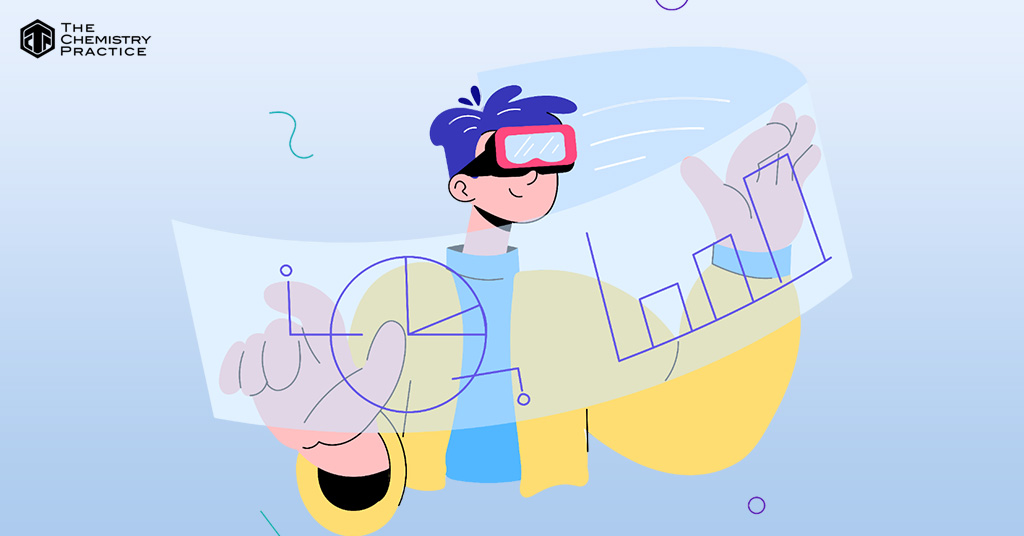
Modern technology has made it possible for students to engage with chemistry in ways that go far beyond the textbook. Virtual lab software, interactive periodic tables, and simulation platforms allow learners to test chemical behaviour in a safe and engaging environment. These tools show instant outcomes that would otherwise take multiple lab sessions to replicate, giving students both efficiency and variety in their learning. In Singapore, students enrolled in chemistry tuition benefit from these digital tools, making lessons more interactive and dynamic.
At The Chemistry Practice, tutors guide students through these digital resources step by step. For instance, a simulation might demonstrate how changes in concentration or temperature affect the rate of reaction, or how molecular structures influence bonding and geometry. By working through these cause-and-effect scenarios visually, students develop a stronger grasp of abstract principles without relying solely on memorisation. They are especially valuable for those tackling the H2 chemistry syllabus, where visualising mechanisms and applying concepts to unfamiliar problems are crucial for success.
Lab Demonstrations and Practical Visuals
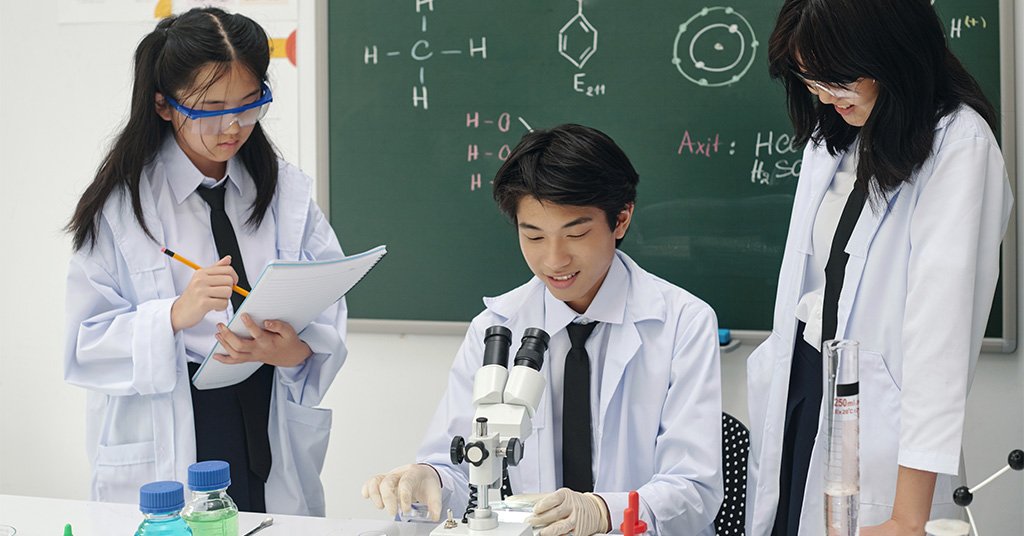
While digital tools are powerful, nothing replaces the impact of seeing chemistry unfold in real life. Simple but striking demonstrations such as colour changes, gas evolution, or the formation of a precipitate provide strong visual cues that help students connect theory with what they observe. These macroscopic changes act as anchors for understanding, making abstract concepts far more memorable.
At The Chemistry Practice, tutors use laboratory experiments not as stand-alone displays but as bridges between theory and practice. For example, observing the vigorous reaction between sodium and water becomes an opportunity to explain electron transfer, bonding strength, and periodic trends. By linking hands-on activities with molecular-level explanations, students learn to think beyond the spectacle and apply concepts logically.
In secondary chemistry tuition, these demonstrations are especially valuable for building curiosity and reinforcing foundational principles. At higher levels, such as H2 chemistry tuition, tutors help students visualise complex mechanisms and experimental design, giving them the confidence to tackle both structured questions and practical assessments. These practical experiences ensure that chemistry is not just memorised, but truly understood.
What Are The Practical Benefits of Visual Learning for Students?

Stronger Exam Performance
One of the clearest advantages of visual learning is its impact on exam results. Visual cues such as diagrams, flowcharts, and molecular models allow students to recall information more quickly under timed conditions. Instead of struggling to retrieve memorised text, they can picture the structure of a molecule, the steps in a reaction pathway, or the trend across a group in the periodic table.
This ability is especially important for learners taking O Level chemistry, where exam questions often require both speed and accuracy. By relying on mental images rather than pure memorisation, students can answer with greater confidence, structure their responses more effectively, and reduce the likelihood of blanking out under pressure.
At The Chemistry Practice, tutors train students to build these visual anchors into their revision strategies, ensuring they go into exams equipped with more than just knowledge. They carry a toolkit of recall methods that enhance both accuracy and performance.
Deeper Conceptual Mastery
Beyond exam performance, visual learning helps students achieve a deeper understanding of chemistry. Instead of memorising equations without context, learners can use reaction mechanism diagrams, energy profiles, or molecular models to see how processes unfold step by step. This clarity allows them to grasp why a reaction happens, not just what the final outcome is.
Such mastery is particularly valuable when taking pure chemistry tuition, where students are often tested on their ability to apply concepts to unfamiliar questions. By visualising electron movement, bond formation, or periodic trends, they can adapt their knowledge flexibly and construct logical answers, even when faced with challenging scenarios.
Increased Confidence and Enjoyment
When students can finally see what was once abstract, chemistry becomes less intimidating and far more engaging. Visual learning transforms confusion into clarity, giving learners the satisfaction of genuine understanding instead of frustration. This shift often sparks greater motivation, as students begin to view challenging topics as opportunities rather than obstacles.
Confidence grows through small wins. A secondary student taking tuition for chemistry, for example, might struggle with molecular geometry until they picture it with a simple 3D model. Once the concept clicks visually, that success encourages them to approach other difficult topics with the same resilience. For those studying under the demands of the H2 chemistry syllabus, the ability to rely on clear mental images rather than dense text builds assurance during revision and exams.
Long-Term Value for Future Studies
The benefits of visual learning extend well beyond school exams. By developing strong visual foundations, students are better prepared for advanced subjects in medicine, engineering, life sciences, and related fields where molecular understanding is essential. Skills such as interpreting diagrams, visualising reaction pathways, and linking structures to functions carry over directly into university-level learning.
For those progressing from secondary chemistry to university courses, these abilities provide a clear advantage. Rather than re-learning concepts from scratch, students build on a framework they already understand visually, saving time and reducing stress.
Frequently Asked Questions
1. How do I know if my child needs visual learning support in chemistry?
If your child struggles with abstract topics, relies too much on memorisation, or often says, “I can’t picture what’s happening,” they may benefit from visual learning support. A tutor trained in visual strategies can make these concepts clearer and easier to understand.
2. Can visual learning improve exam performance in O-Level and A-Level chemistry?
Absolutely. Visual learning helps students recall information faster during exams. For example, remembering the tetrahedral structure of methane is easier through a diagram than through memorised words.
3. Which chemistry topics benefit most from visual learning?
Topics that are hardest to “picture” benefit the most like the mole concept (linking particles, moles and mass with ratio diagrams), chemical bonding (Lewis structures, VSEPR shapes, lattice models), reaction mechanisms in organic chemistry (curly-arrow diagrams showing electron flow), and molecular geometry/periodic trends (3D models, trend maps).
Conclusion
Visual learning has the power to transform chemistry from an abstract subject into something students can truly grasp. By turning invisible ideas into clear images, models, and demonstrations, learners gain stronger recall, deeper understanding, and greater confidence in exams. More importantly, these skills extend beyond school, preparing students for advanced studies and future careers in science-related fields.
At The Chemistry Practice, our tutors specialise in using proven visual learning techniques to simplify complex chemistry topics. From secondary and pure chemistry tuition to advanced chemistry, we tailor lessons to suit each student’s needs, ensuring learning stays both effective and engaging
Contact us today to find out how our dedicated team can support your child in building clarity, confidence, and exam success with the help of visual learning.